
KOJO joins PMY Group to revolutionise global sports and entertainment
.

This article was written by PMY’s Global Chief Technology Officer Joseph Costanzo
Operators of the world’s most dynamic live environments all aim to deliver seamless, high-quality experiences for their guests.
Think about stadiums, venues and major events and places like airports and retail precincts, they all welcome large numbers of people, with differing needs, and those guests expect to move around with ease.
To not only achieve that comfort but to exceed expectations, operators require a deep, real-time understanding of how people move, behave, and interact within a space.
At PMY, we built Optic to help map crowds and their behaviour to support operators of live environments.
Optic is PMY’s AI-powered crowd intelligence platform designed specifically for events, precincts and venues. It provides a real-time operational view of what’s happening on the ground, monitoring how people are moving around, where they’re congregating, how precincts are being used. It also tracks what items and activations people are interacting with and where pressure points are emerging.
That might sound simple, but at a four-day major event the data and insights can influence things like queues, revenue and a fan’s overall experience. Responding quickly is key!
Traditionally, operators have relied on fragmented data sources such as CCTV feeds, ticket scans, anecdotal reports from staff on the ground, or post-event analysis. By the time a problem is visible, it is often already impacting people.
Optic brings those signals together in a unified way.
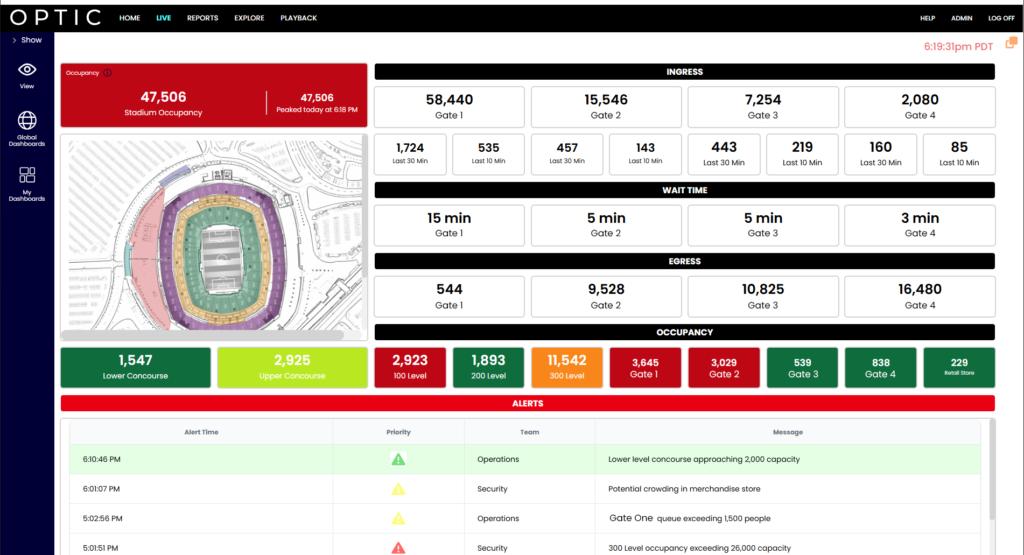
An example of an Optic dashboard monitoring wait times at gates
The platform ingests data from existing systems such as CCTV, ticketing, accreditation, point-of-sale, and event management platforms, and can also take information from LiDAR sensors deployed across a site. This data is then translated into clear, actionable insights delivered through easy-to-read dashboards.
The result is a live, unified picture of an environment that operators can act on.
For example, instead of reacting to congestion after it builds, teams can view crowd density increasing in real-time and can intervene early through adjusting access points, redeploying staff, or redirecting foot traffic before the experience deteriorates.
Instead of guessing which retail or hospitality areas are underperforming, operators can understand patron’s interests and dwell times, enabling smarter placement of activations, products and resourcing.
Rather than relying on static infrastructure plans, venues can continuously evolve based on how people truly use a space. With one of our clients, we found fans were socialising for long periods in an area designed for take-away hospitality. The event operators took that insight and built vertical social spaces the following year to enhance the fan experience, creating an environment that suited their guest’s needs.
Optic can be flexible and can track what matters most to the client. In the past we’ve tracked grandstand seating capacity and then provided that data direct to fans via a sporting app. The live information enabled fans to understand where they could find spare seats taking the guesswork out of their journey at the event.
This is where the real value of crowd intelligence lies. It’s not just in observing behaviour, but in enabling better decisions, which ultimately impacts fans.
We’ve seen this play out across some of the world’s largest and most complex environments.
Optic is now deployed at major global sporting events, like the Australian Formula 1 Grand Prix, Grand Slam tennis tournaments, major golf championships, where understanding fan movement at scale is critical to both safety and experience.
But the application extends far beyond sport.
At airports, Optic provides real-time queue insights to both terminal operators and travellers by tracking wait times at security. One airport is now displaying these wait times to passengers, helping them better understand how long screening will take and reducing travel-related stress—particularly when queues appear longer than they actually are.
In retail environments, Optic provides a clearer view of how customers move through spaces, which areas drive engagement, and how layout and staffing decisions can directly influence revenue outcomes.
Across all of these environments, the common thread is complexity, and the need for clarity to support people.
Importantly, Optic delivers these insights without collecting personal or identifiable information. The platform is designed to analyse patterns and behaviour at an aggregate level, ensuring privacy is maintained while still providing meaningful intelligence.
That balance is essential. As technology becomes more embedded in public spaces, it must enhance experiences without compromising trust.
Another key shift we’re seeing is the move from retrospective analysis to real-time operations.
Historically, much of the data generated in live environments has been used after the fact — to review performance, justify decisions, or inform future planning. While that remains valuable, it doesn’t help when you’re in the middle of a live event with tens of thousands of people on site.
Optic empowers live environments with its real-time accuracy.
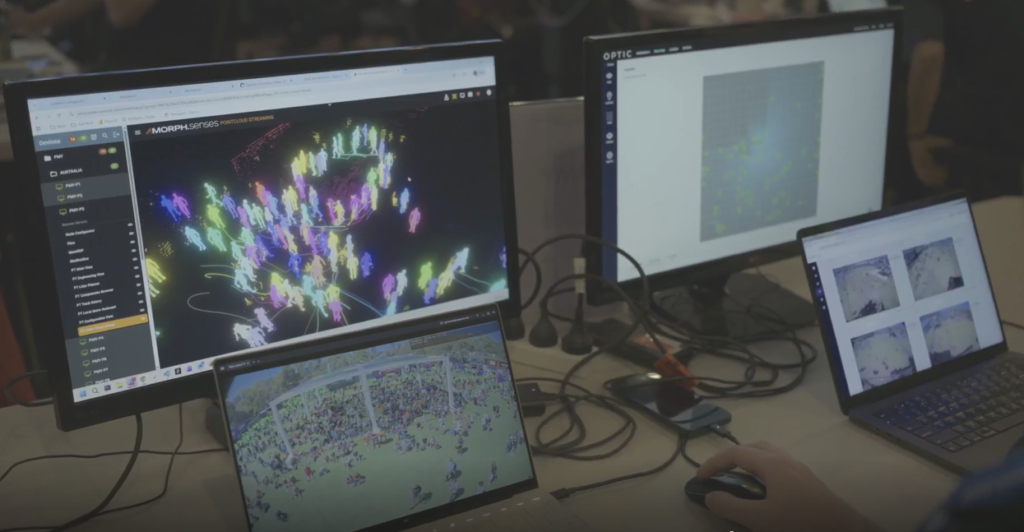
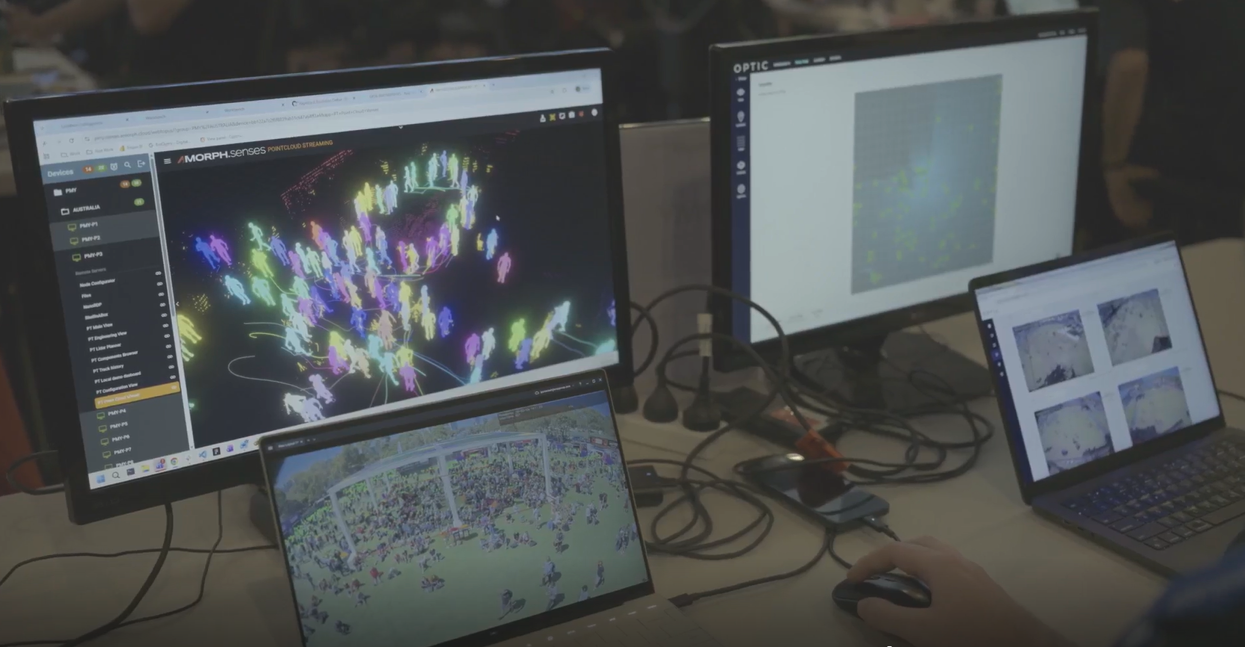
PMY analysts using Optic inside a major event’s command centre
By delivering insights as situations unfold, operators can move from reactive to proactive.
PMY also has a team of Optic analysts that can lead crowd strategy and insights based off data coming through. Our analysts work as part of a wider operations team, usually sitting within in a command centre, reviewing crowd behaviour and data and providing strategies to improve crowd movement, logistical changes and retail and activation strategies.
That’s when environments truly become intelligent, with deep instant insights.
It’s also why we’re seeing increasing demand for solutions like Optic globally. Operators are under more pressure than ever to deliver safe, seamless, and commercially successful experiences, often with tighter margins and higher expectations.
Earlier this year, PMY was awarded Best Event Technology at the Event Production Awards in the UK by Access All Areas Magazine. The award specifically acknowledged technology that solves real operational challenges, which has always been our focus.

PMY accepting the Best Event Technology award at the Event Production Awards in the UK by, run by Access All Areas Magazine.
Optic is all about enabling environments that are safer, more efficient, and more enjoyable for the people moving through them.
We are pleased to play a role in supporting live environments, through Optic. It was built specifically for live environments by our events people who not only have deep industry knowledge in that space but who truly love live sport, entertainment and events.
www.pmygroup.com/optic
NEWS FROM PMY.