
KOJO joins PMY Group to revolutionise global sports and entertainment
.

Featuring perspectives from Fritz Schwentker
Great performance venues can make an impact from the moment someone walks into a foyer right through to the show. They’re designed to create moments audiences will remember, whether that’s a standing ovation at a Broadway-style show, a packed community concert, or a student’s first school musical.
Fritz Schwentker, Principal at WJHW, part of PMY Group, has helped shape performing arts and live entertainment venues across the United States for the last 25 years, advising on projects ranging from school theatres and community performance spaces to major entertainment venues.
While every project is different, Fritz always starts with the same conversation: What will this space be used for? Who will run it every day? And how can it continue to serve its community for decades to come?
Designing for the people behind the scenes
Whether it’s a major concert hall, or a school performing arts centre, every project has one thing in common: it needs to be simple to operate.
“If the only person who knows how to use the system is your best technician, we’ve probably overcomplicated it. You need to consider how easy the technology is to operate for a teacher who is simultaneously managing a classroom,” he says.
It’s a philosophy that extends beyond theatres. The same thinking applies when the wider PMY team designs technology for stadiums, arenas and other live venues. The technology should support the people using it, not become another problem to solve.
The things audiences never see
Most people notice the performance while Fritz notices everything happening behind it and his recommendations and design stem well beyond the stage.
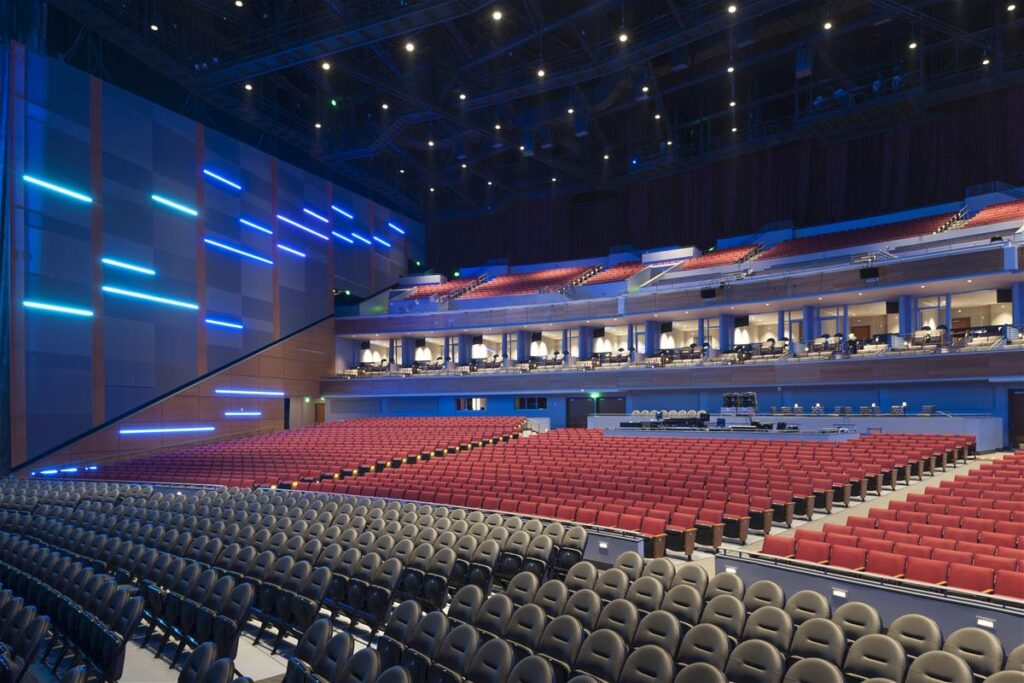
“As theatre consultants, we think about the loading dock that allows scenery to move efficiently, and the backstage circulation that keeps performers out of each other’s way. The control room location, seating layout and comfort, acoustics, drapery, lighting positions and rigging above the stage are all details that need to be addressed carefully.”
“None of those systems work in isolation,” he says. “They’re all connected and all have impact.”
It’s why Fritz believes theatre consultants should be involved early in a project. Decisions made during the first stages of design often determine how successful a venue will be decades later.
One of the biggest trends in the industry is the demand for flexible spaces.
Venue operators and schools want facilities that can host acoustic and amplified concerts, assemblies, drama productions, graduations and community events. Schools have always worked with the concept of a cafetorium or gymnatorium, combining performances with dining or athletics.
Municipalities are increasingly interested in parks and outdoor performance spaces, while sports venues often host more concerts than games, relying on a venue model that can do it all.
But flexibility has limits.
“You can’t ignore physics,” Fritz says with a laugh.
“The acoustics that work beautifully for an orchestra aren’t the same as what you’d design for a gymnasium or a sporting event, so you really need to prioritise what you want the space to be used for and design based off that.”
Rather than recommending the bleeding-edge technology or promising every possible outcome, Fritz says his role is helping clients understand the trade-offs so they can make informed decisions that suit their goals and budget.
“One of the things that makes WJHW different is that we have independent experts across acoustics, audio-visual systems, security, and lighting all working together. We can also bring in colleagues who design technology for NBA and NFL stadiums when it’s relevant, giving our clients ideas and expertise they might not otherwise have access to.
“That expertise works both ways, with the performing arts team applying its experience in areas such as rigging and specialist lighting to PMY Group’s larger venue projects.
“We can also easily connect clients with colleagues working in data and AI, if they’d like greater insights into their audiences.”
Looking beyond opening night
Fritz says technology is changing rapidly, particularly when it comes to video.
“Even our school clients are increasingly looking at large-scale video installations to make a performance more visually fluid and immersive. They’re exploring projection mapping, LED backdrops, livestreaming, and digital content creation within and alongside traditional stagecraft,” he says.
While video technology can create incredible visual experiences, Fritz says it requires significant upfront investment and ongoing effort to produce content. Large-scale installations also introduce practical considerations around heat, structure, hoisting and how screens can be concealed when not in use.
“It’s about what’s right for that venue,” he says. “We want clients thinking about how they’ll operate and maintain the technology in five, 10 or even 20 years’ time, not just how it looks on opening night.
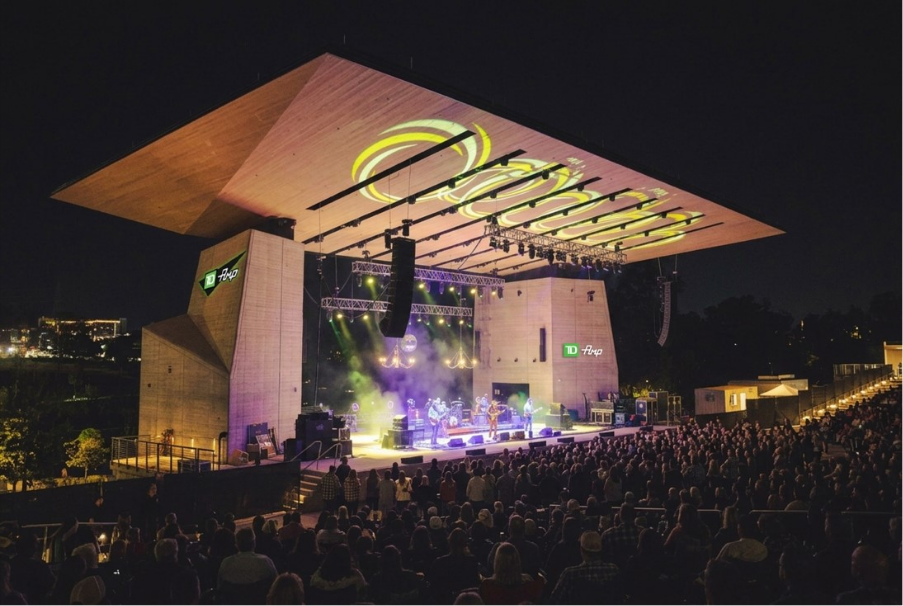
When pondering trends, Fritz says outdoor venues and amphitheatres have appeared more regularly on his team’s project list.
“We’ve seen developers start planning for straightforward simple stages set at the bottom of a public lawn morph into fully-fledged ticketed amphitheatres that book national acts and generate strong revenue,” he says.
Schools are another area where Fritz is seeing continued growth, particularly in Texas, where the arts remain an important part of the curriculum and the school-age population continues to increase.
“What’s particularly interesting is the increasing crossover between performing arts, STEM and CTE programs, with more students learning the technical side of entertainment, sports and video production through dedicated academic programs.”
Building places people will keep coming back to
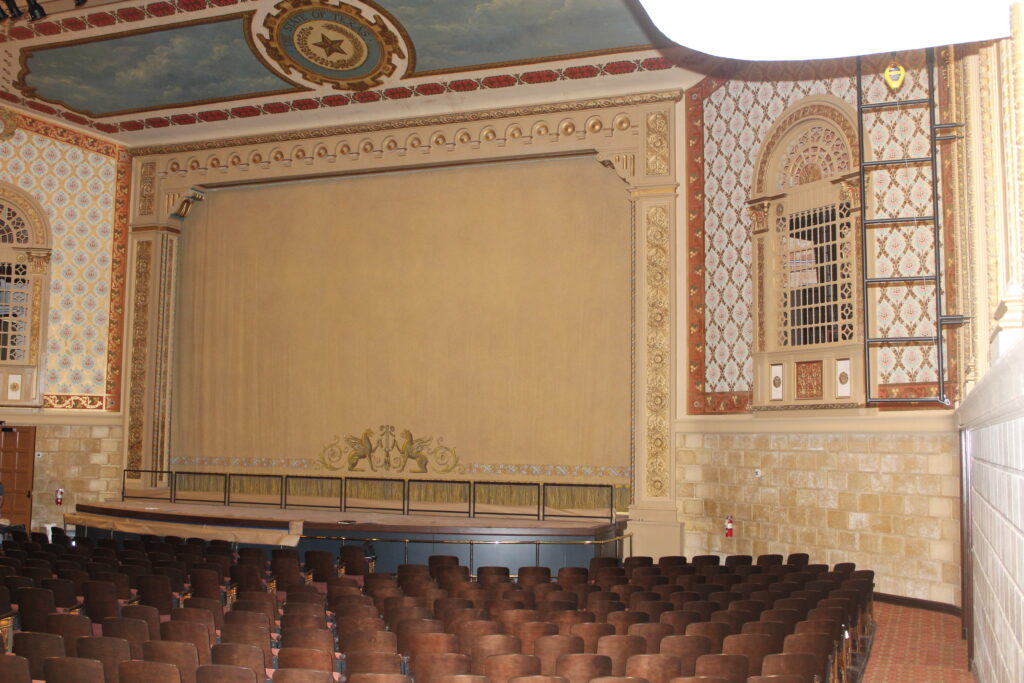
One of Fritz’s favourite projects was the transformation of the historic Murphey Performance Hall in San Angelo, Texas, a 1920s vaudeville theatre that was restored to become a modern performing arts venue.
Working alongside longtime architectural partner Killis Almond, the project combined modern theatre design with historic preservation. A standout achievement was recreating the theatre’s original painted fire-safety curtain, which could not be retained in its original state.
By securing additional funding, the project team commissioned acclaimed scenic artist Karen Maness from the University of Texas to reproduce the historic artwork on a new scenic curtain, with assistance from her students.
The collaboration not only preserved an important piece of the venue’s heritage but also became an educational opportunity, with the restoration process documented for university teaching materials.
Another project particularly close to Fritz’s heart is a new community performing arts facility in Austin, Texas.
Designed as a flexible studio/black-box theatre, it will be operated by a well-regarded professional theatre company to give local arts groups a permanent home for rehearsals, performances, and community events.
“It’s exciting because it’s solving a real need in the community and I’ve known the group for more than 25 years,” he says. “Those are the projects that stay with you.”
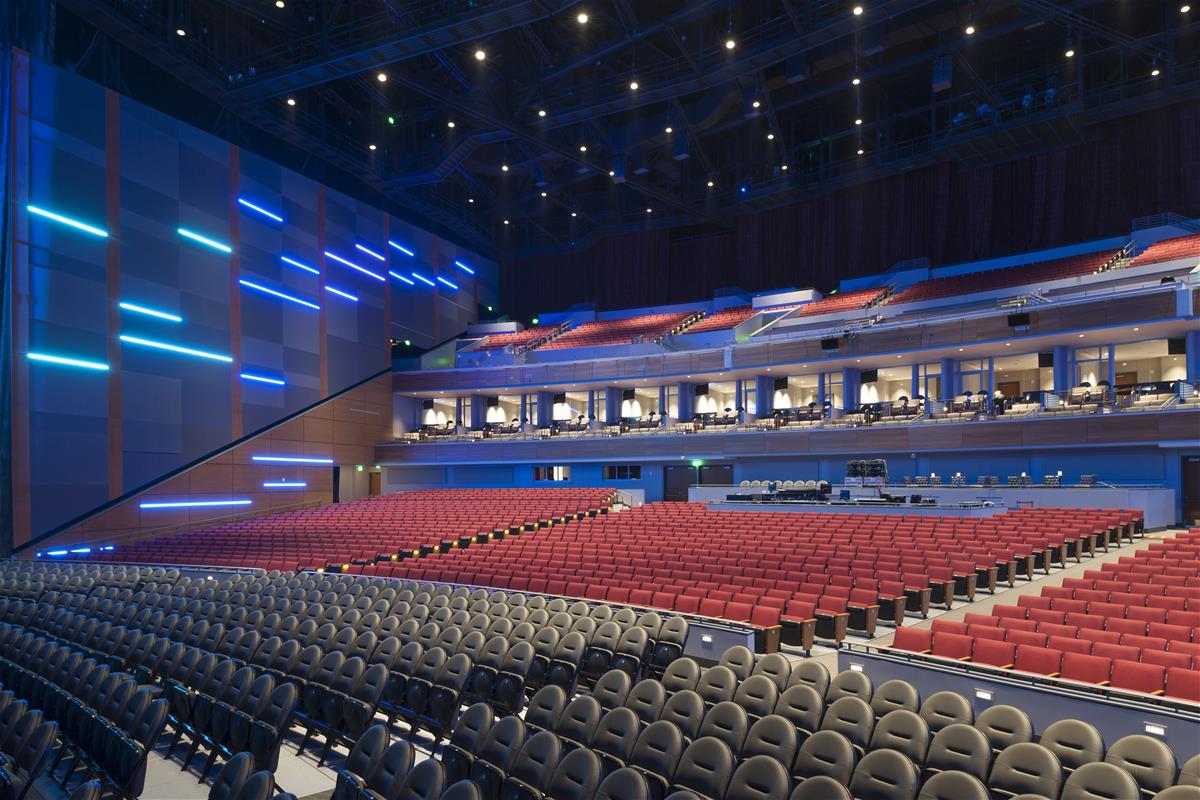
Other highlights for Fritz include The Smart Financial Centre, which is a concert hall located in Sugar Land, Texas. Also, working with the Houston Ballet for their downtown Center for Dance and being involved in the Lila Cockrell Theatre in San Antonio, Texas.
Ultimately, Fritz measures success by whether a space is still serving performers, audiences and the community years later.
Whether it’s a theatre, stadium or arena, he believes the same principle always applies.
“Good design isn’t just about putting more technology into a building,” he says. “It’s about creating a venue that people enjoy using and working in.”
NEWS FROM PMY.